Colposcopy

Examination of the cervix after an abnormal smear or a positive HPV test

Coming soon at our clinic

About the service

Colposcopy is a magnified examination of the cervix, vagina and vulva using a colposcope. It allows changes that are not visible to the naked eye to be assessed precisely and, if necessary, a sample to be taken for histopathological examination. It is the basic examination after an abnormal smear result or a positive HPV test.

The examination is performed by a doctor in a gynaecology consulting room, takes about 15–20 minutes and requires no anaesthesia. An abnormal smear or a positive HPV test does not mean cancer; the purpose of colposcopy is precisely to assess whether a change requires treatment or only observation. Colposcopy will be available at Sonar Clinic soon; until then, the doctor will advise during a gynaecology consultation where to have the examination.

Gynaecology and Obstetrics — consultations, ultrasound, cytology, HPV →

Who it’s for

  • Patients with an abnormal smear result (ASC-US, LSIL, ASC-H, HSIL, AGC)
  • Patients with a positive HPV test, particularly types 16 and 18
  • Women with worrying symptoms: bleeding after intercourse, bleeding between periods
  • Patients under follow-up after treatment of cervical changes

Scope

  • Colposcopy of the cervix, vagina and vulva
  • Acetic acid and Lugol’s iodine tests
  • Sample collection for histopathological examination (targeted biopsy) as indicated
  • Discussion of the result and the plan for further care

Indications for colposcopy

The most common reason is an abnormal smear result or a positive high-risk HPV test. The doctor decides whether the examination is needed based on the result, the patient’s age and previous tests; not every abnormal result means a colposcopy is necessary — sometimes it is enough to repeat the smear or the HPV test after a set period.

Colposcopy is also performed for bleeding after intercourse, for changes seen during a gynaecological examination, and as part of follow-up after treatment.

What the examination involves

The patient lies on the gynaecological couch as for a routine examination. The doctor inserts a speculum and looks at the cervix through the colposcope, which does not touch the body. Next, a solution of acetic acid, and often Lugol’s iodine, is applied to the cervix; abnormal areas change colour under their influence. This may cause slight stinging.

If the doctor sees a suspicious area, a small sample is taken from it (targeted biopsy). This is felt as a brief pinch. The sample is sent for histopathological examination, the result of which is usually available after 2–3 weeks.

Preparing for a colposcopy

The examination is scheduled outside menstruation, ideally in the first half of the cycle. For 2 days before the examination, avoid intercourse, tampons, douching and vaginal medication. It is worth bringing the smear and HPV test results and a list of medications you take. You do not need to fast.

After a biopsy there may be slight spotting for a few days; for about a week it is advisable to avoid intercourse and bathing in a bathtub. The doctor gives detailed instructions after the examination.

Results and further care

The doctor discusses the colposcopic picture immediately after the examination. If a sample was taken, the plan is set once the histopathology result is available: this may be observation and a check-up after a few months, treatment of the changes (e.g. a procedure to remove the affected part of the cervix), or further diagnostics.

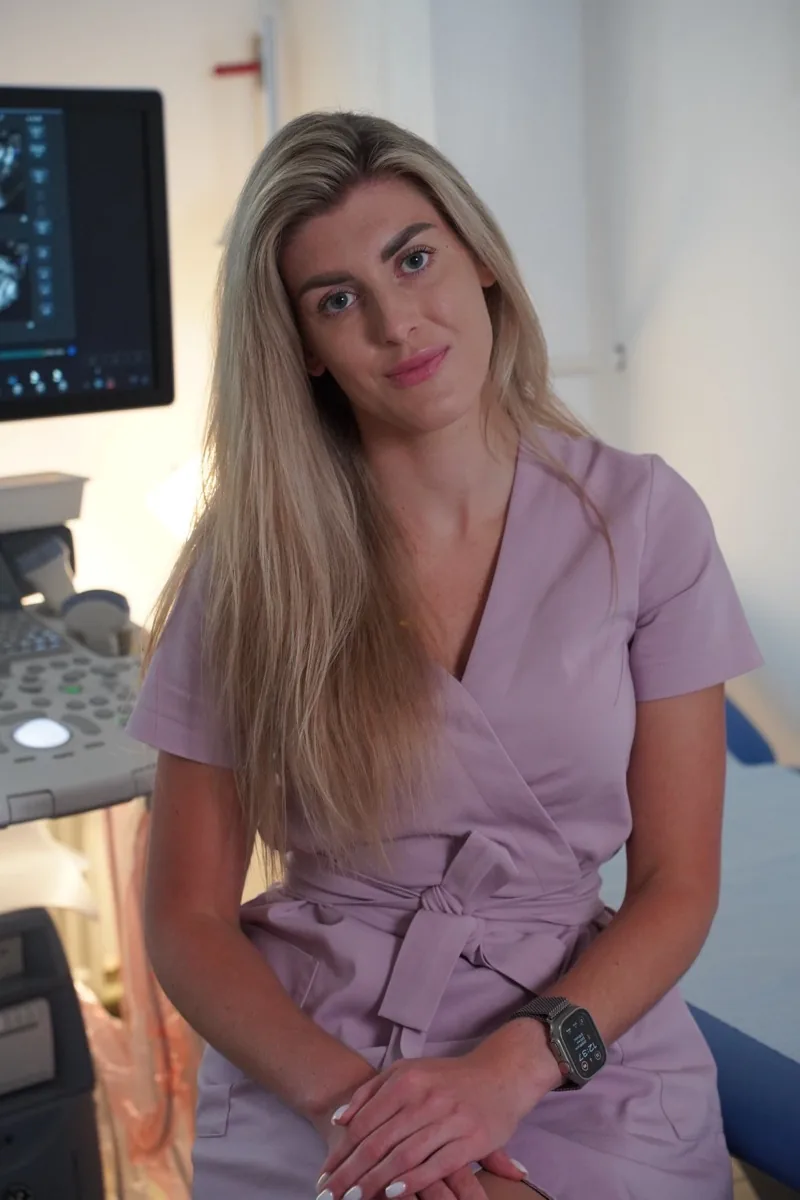
Colposcopy at Sonar Clinic will be performed by Barbara Ossowska, MD, a doctor in specialty training in obstetrics and gynaecology. We will publish the start date and the price of the examination on this page. Until then, the doctor will advise during a gynaecology consultation where to have a colposcopy.
FAQ

FAQ — Colposcopy

Does a colposcopy hurt?

Looking at the cervix itself does not hurt; the solutions applied to the cervix may cause slight stinging. Taking a sample is felt as a brief pinch. The examination requires no anaesthesia.

How long does a colposcopy take and when is the result available?

The examination takes about 15–20 minutes, and the doctor discusses the colposcopic picture straight away. If a sample was taken, the histopathology result is usually available after 2–3 weeks.

Does a positive HPV result mean I have to have a colposcopy?

Not always. The doctor decides whether a colposcopy is needed based on the HPV type, the smear result and your age. Sometimes a follow-up smear or HPV test after a set period is enough.

How should I prepare for a colposcopy?

The examination is scheduled outside menstruation. For 2 days beforehand, avoid intercourse, tampons, douching and vaginal medication. It is worth bringing the smear and HPV test results. You do not need to fast.

Can a colposcopy be performed during pregnancy?

Yes, colposcopy is safe in pregnancy and is sometimes recommended after an abnormal smear. The doctor decides individually whether to take a sample.

Can I already have a colposcopy at Sonar Clinic?

Not yet. Colposcopy will be available at Sonar Clinic soon; we will publish the start date and the price on the colposcopy page. Until then, the doctor will advise during a gynaecology consultation where to have the examination.

Consultation before the examination

Until this test is available at Sonar Clinic, the doctor will advise during a consultation where it can be done. You can book a consultation online or by phone.

← All services